If you drive a modern Jaguar, Land Rover, Audi, or Tesla or even Renault, your car is likely built with a “Spaceframe” or panels made of structural aluminium. While this makes your car lighter, faster, and more fuel-efficient, it creates a massive challenge if you’re involved in an accident.
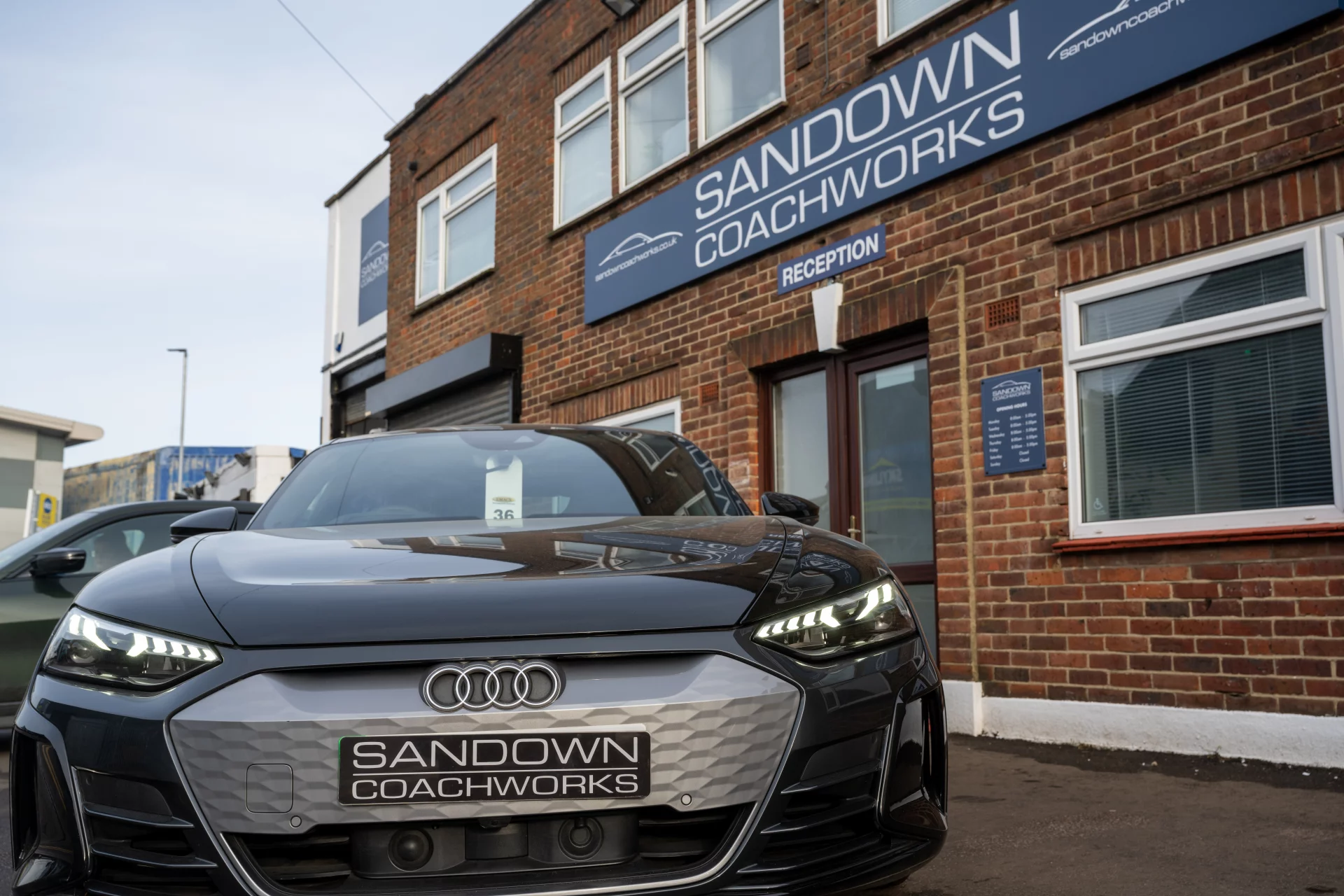
At Sandown Coachworks, we are one of the few repair groups in the South East (covering Camberley, Shepperton, and Heathrow) certified to the BS10125 Structural Aluminium standard.
But why does the metal type matter to you, the owner? It comes down to a scientific phenomenon called Galvanic Corrosion.
The “Clean Room” Necessity: Why Metals Must Never Mix
Steel and aluminium are like oil and water—they do not mix. If a single microscopic particle of steel dust (from a nearby repair) lands on a bare aluminium panel, it triggers a chemical reaction known as galvanic corrosion.
- The Result: The aluminium begins to “oxidize” or rot from the inside out, often causing the paint to bubble and flake off months after the repair is finished.
The Sandown Difference:
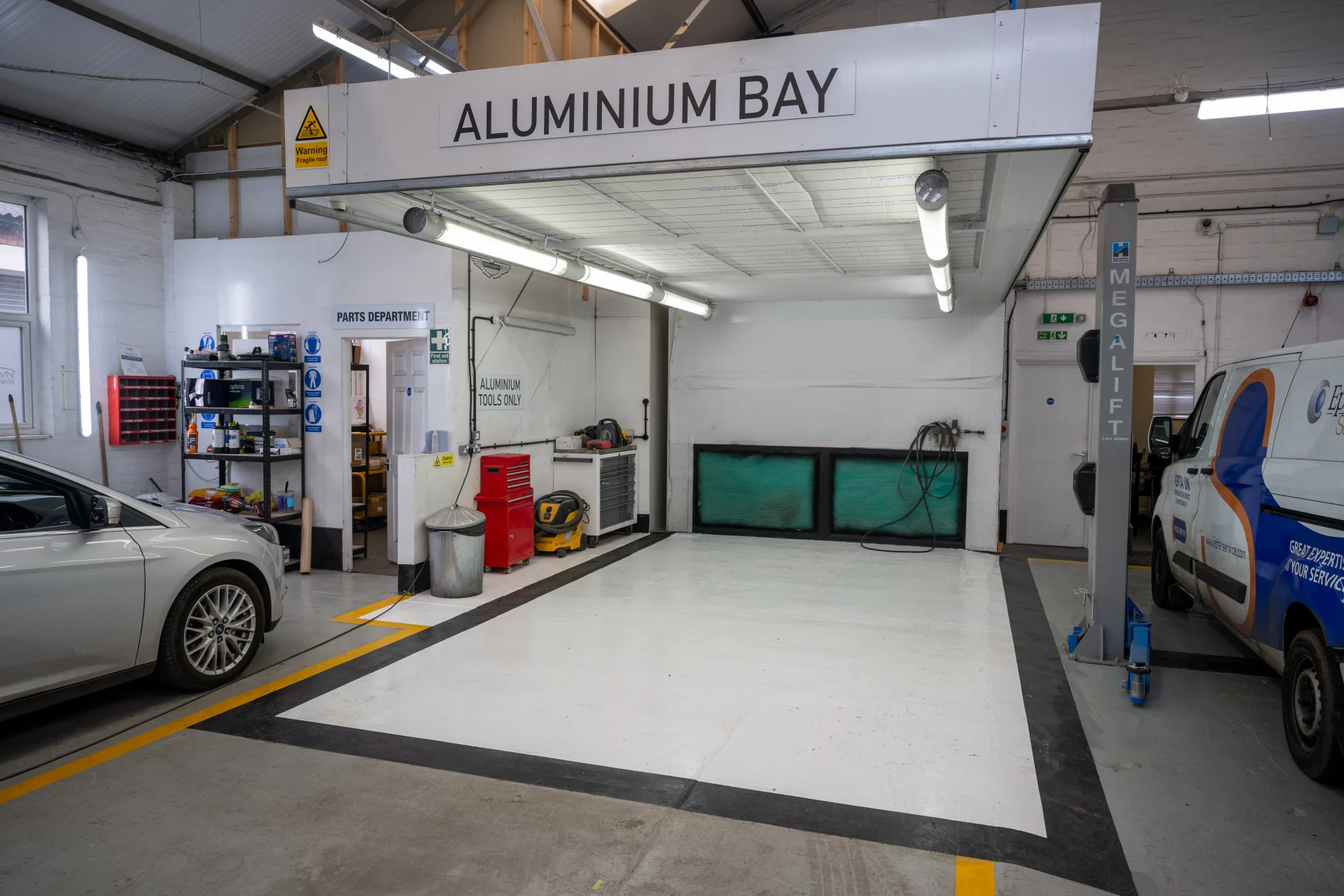
To prevent this, our sites in Camberley, Shepperton, and Heathrow utilize dedicated Aluminium bays. These are isolated environments with:
- Separate Tooling: We never use a hammer or file on aluminium that has touched steel.
- Specialist Dust Extraction: To prevent cross-contamination in the air.
- Structural “Clean Rooms”: Ensuring your car’s structural integrity remains factory-perfect.
3 Key Differences in the Repair Process
| Feature | Steel Repairs | Structural Aluminium Repairs |
| Memory | Steel has “shape memory”—it can often be pulled back into place. | Aluminium has no memory. If stretched, it stays stretched or cracks. |
| Heat | Can be welded with standard MIG welders. | Requires high-tech MIG Pulse welding and controlled heat monitoring. |
| Bonding | Primarily spot welding. | Often uses Aerospace-grade bonding and self-piercing rivets (SPR). |
The Insurance Trap: Don’t Let Them Choose a “Standard” Shop
Many insurance companies will try to direct you to their “approved” network to save costs. However, many of these “general” bodyshops are not equipped for structural aluminium.
If an aluminium-bodied car is repaired using steel techniques:
- Safety is compromised: The “crumple zones” may not perform as the manufacturer intended.
- Warranty is voided: You lose your anti-perforation and structural warranties.
- Resale Value drops: Professional appraisers can spot improper aluminium repairs instantly.
Why Sandown is the South East’s Aluminium Specialist
With 13 Manufacturer Approvals soon to be 17! We don’t just “fix” cars; we restore them to the exact tolerances set by the factory. Whether it’s a Range Rover from Camberley, an Audi A8 from Shepperton, or a Tesla near Heathrow, our technicians are trained in the specific “rivet-bonding” techniques required for modern luxury vehicles.
Does your car have aluminium damage?
Don’t risk a “standard” repair on a high-tech vehicle. Contact our specialists today for a technical assessment:
- Shepperton Site (Rodd Estate): 01932 240471
- Heathrow Site (Hanworth Trading Estate): 0208 755 1850
- Camberley Site (Yorktown Business Park): 01276 408112